Showing posts with label Young Adult. Show all posts

Monday, December 12, 2011

Review: The Princess Diaries by Meg Cabot

Annd we're pulling away.  I'm up to 93 books and I'm hoping against hope to finish by the end of the year.  I've put aside my thick biographies and historical fictions in favor of shorter, snappier, lighter fare.  Seven more to go.  As David says, I'm "so close!"  But not quite there yet.  Book #93 is The Princess Diaries by Meg Cabot.

Fourteen-year-old Mia Thermopolis is in search of self-actualization.  She's the combat-boot wearing, strict vegetarian daughter of a free-spirited New York artist mother and a father who works in some sort of politics in the far-off principality of Genovia (think Monaco).  Mia's life is fraught with concerns -- how to increase her bustline, passing algebra (no mean fete, even if the algebra teacher is dating her mom), and getting the cutest boy in school to notice her.  Then her father drops a bomb -- he's not a politician, he's the Prince of Genovia.  And because of his recent bout with cancer, he can no longer provide Genovia with an heir.  Which means Mia is a princess, and heiress to the throne.  And she's not happy about it.

I first read Meg Cabot's tale of the reluctant princess back in college, at age 20.  I love the Disney film version starring Anne Hathaway and Julie Andrews.  Be forewarned -- the book is very different from the film.  Julie Andrew's kindly Dowager Princess Grandma is the French-speaking, chain-smoking, borderline alcoholic Grandmere, making Mia's life a living nightmare with a constant stream of French insults and deportment classes she calls "princess lessons."  While at 20 it was very easy for me to drum up sympathy for Mia, it is harder now at age 28, when I guess I'm that much more removed from teenage angst.  And that I can only summarize by saying this:

For someone who is a vegetarian because she is so concerned about the well-being of the planet and its creatures, Mia has absolutely zero grasp on perspective.  Everything is drama.  EVERYTHING IS A VERY BIG DEAL, whether she's being bullied into cutting and dying her hair blonde, or considering cheating on her algebra quiz, or discovering her teacher at her kitchen table in the morning in his boxer shorts.  Everything is a calamity to Mia.  It is hard to take her genuine problems seriously, because she can't differentiate them from minor catastrophes.  Again, maybe it's because I'm old and jaded now, but I wonder if the average teen girl is as flighty and overdramatic as Mia, and if so, how the hell do they ever grow out of it?

I used to love The Princess Diaries series -- I read all the way until Book 5, Princess in Pink, when I started to get bored of both Mia's dramatics and the unbelievable idiocy of the majority of her school friends.  I picked up #8, Princess On the Brink, and read about three chapters before realizing that no, it doesn't get any better (spoiler alert: Mia freaks out because her boyfriend happened to have had sex before he was dating her, with someone else, and dumps him).  

After the travesty that was Abandon (and omg, what a mess that was), I was hoping that rereading some old Meg Cabot, that I used to love, would be a palate cleanser.  Unfortunately, this is one of those books that's better left in your childhood memories, if you liked it when you were young.

Rating: ***

Tuesday, August 30, 2011

Review: Delirium by Lauren Oliver

Day Three with no power, and now for something completely different, Day One with no hot water!  *sigh*  Because we're in such an area of low importance, I have a feeling we won't get either back until at least the end of the week.  At least, I am trying to prepare myself for the disappointment of going home every day and finding the power still out.

A silver lining (there is one, I think) is that I am tearing through books faster than I can review them.  I actually finished this book on Sunday, and I've finished another besides.  So here it is -- Lauren Oliver's much-touted Delirium.

Lena Haloway is terrified of love.  Love is the disease that has been eradicated by her government -- all citizens receive "the cure" at age 18, and go on to live completely normal, healthy lives free of amor deliria nervosa.  Love is what drove her mother to commit suicide when Lena was only six.  Love casts a shadow over every aspect of life, every part of Lena's dystopian society.  Love is the last thing that Lena wants any part of.  But less than 50 days before her cure, Lena realizes that love is the one thing she can't live without.  And now she has to make a choice -- live a lie forever, a life without love, or leave behind everything that she knows.

After The Hunger Games and Divergent, I've been definitely riding the wave of dystopian YA literature.  Abandon, while not dystopian, was a complete bust, and so I was hoping that Delirium would renew my faith in YA lit.  It did.  I liked Delirium, unfortunately not as much as HG or Divergent, but I liked it nonetheless.

Lena, as a character, is interesting in her mediocrity.  She's no Bella Swan -- quick to tout her mediocrity, yet unable to explain why everyone loves her (I still don't get the attraction).  She's not Katniss Everdeen, superwoman and queen of survival.  And she's not Tris Prior, a rebel without a cause from the right side of the tracks, rushing headlong into conflict.  Lena is...plain.  She's not attractive.  Boys don't like her.  There's nothing "special" about her.  Her main concern, unlike Bella, unlike Katniss, unlike Tris, is being singled out.  If it was up to Lena, she'd be completely ordinary forever, as long as it guarantees that she won't fall into the same trap her mother did.


The theme of love as a mental illness is an interesting one.  Lena is terrified of becoming like her mother -- so blinded by amor deliria nervosa that the disease eventually took her life.  It's interesting to see a writer talk so candidly and go so in-depth with the story of a child's response to the mental illness of their parent, and the question, in the end, of if the mother is the one who is sane, and not the authorities, after all.


The turning point of the book, for me, was the climax at the end.  Up until that point, I wasn't sure if I'd actually read the sequel.  Not that Delirium was bad, but that I had pretty much assumed I knew how everything would go, only to have the end come as a surprise.  I don't know if I'll be reading the sequel, Pandemonium, but I wouldn't rule it out.  We'll see.


Rating: *** and 1/2


Saturday, August 13, 2011

Review: Searching for Dragons by Patricia C. Wrede

While David and I were visiting our good friends, Lyndsey and Joe, the other night (the same two people who taught us how to fire spin), I was looking over Lyndsey's book collection and realized that she had allll four of the books of the Enchanted Forest Chronicles!  Having read only book one (Dealing with Dragons) before, I asked if I could borrow book two.  Lyndsey was kind enough to lend me the remaining three books of the series.  Since they are short and snappy, I started and finished book two today!

Searching for Dragons takes place one year after Dealing with Dragons ends.  Mendanbar, King of the Enchanted Forest, is fed up with royal protocol and being nagged to marry.  So he takes the day off and escapes into the Enchanted Forest, only to discover that someone has been stealing magic from the Forest itself, and framing the dragons of the Mountains of Morning for the theft.  When he goes to ask the King of the Dragons, Kazul, for advice, he encounters the Cimorene, the most unlikely princess in the world, who tells him that Kazul is missing.  Together, Mendanbar and Cimorene take an adventure through the Enchanted Forest itself, to find Kazul and the thieves before the magic is sucked from the Enchanted Forest forever.

Maybe it is my extreme devotion to Dealing, but I didn't like this book half as much.  I think it might be because Mendanbar is the star of the story, and not Cimorene, the heroine of book one.  Mendanbar is a nice enough guy, but he's not as gutsy and plucky as Cimorene, and he doesn't appeal to me as much.  The plot of the story moves faster than Dealing did, as well.  It's not difficult to follow, it's just not as interesting IMO, especially since you know from the get-go (especially if you read the first book) who the culprits are, whereas in Dealing, the perpetrators remain a mystery until the end of the book.

It's a good second novel, and I'm planning on reading books three and four shortly.

Rating: ***

Wednesday, August 10, 2011

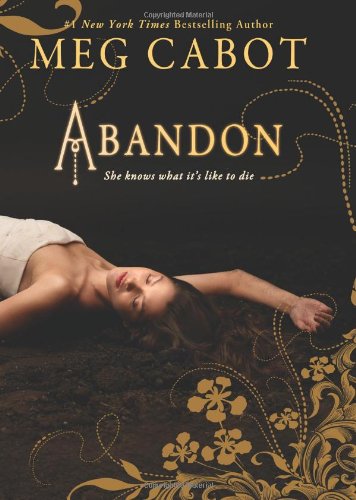
Review: Abandon by Meg Cabot

I have long professed my dislike for the Twilight series.  I don't like it.  I've tried it, and I just don't like it.  In fact, my dislike of the Twilight series ran so deep that for awhile, I gave up YA literature.  Well, that was a stupid decision, and I've since amended it, and I've read a LOT of YA fiction this year.  When I heard the Meg Cabot had a new book out, Abandon, I decided to pick up a copy and give it a try.  Years ago, I ate up her Princess Diaries series.  I figured I'd like this too.

Wrong.  So wrong.

Abandon markets itself as a darker tale of Hades and Persephone -- the Greek god of the Underworld and the young girl he kidnapped and made his queen.  Our heroine, Pierce Oliviera, has been to the Underworld before.  She died a year and a half earlier in a freak drowning accident.  And while she was there, she met John, who gave her a beautiful necklace to "protect her from evil."  Pierce, frightened, ran away from John, managed to escape the Underworld ,and returned to the land of the living.  But her life didn't go back to the way it was before the accident, and after too many incidents, Pierce is forced to return to her mother's homeland of Isla Huesos, the "Island of Bones", Florida, where darkness and evil seem to follow her wherever she goes.  Pierce knows that she escaped death once, but Death wants her back, and she isn't sure she'll be able to escape again.

*sigh*  Okay.

First.  The character of Pierce (the name, OMG, I realize it's supposed to be a throwback to "Persephone" but dear God).  If you like Bella Swan, or any other "heroine" who gets herself into stupid situations and suddenly finds herself rescued by an overbearing male suitor, congratulations, here's Pierce Oliviera.  It really makes me want to cry that this generation of teens "relates" to this type of literary character.  Pierce died.  I get it, that sucks.  I think it would especially suck to be fifteen years old and find out what happens when you die.  But for the first half of the book, Pierce's mental meanderings (I can't call them "thoughts") went along the lines of What does it matter?  Why do all these other peons think that anything they do in this life means anything?  We're all just going to die anyway.  In short, Pierce is that teenage emo wannabe goth that sat in the corner of the cafeteria not talking to anyone and cried during classes in high school.  Why are we glorifying this again? 

When she's not talking about how useless life is or emo-ing about her trip to the Underworld and back, Pierce is incredibly shallow, narcissistic, and stupid.  She doesn't know who Homer is (the Greek writer, not Simpson) and she doesn't know any Greek mythology, which most of us learned in elementary school (Pierce is supposed to be 17 and a senior in high school).  But it's okay, because John's mysterious necklace will protect Pierce from evil, so naturally, anything terrible that happens to anyone else is obviously HER FAULT for not stopping it.  So when she thinks she can "help" somebody, she puts herself in danger (so John comes swooping in yet again all Edward Cullen-like to save her AGAIN), and causes damage that WOULD be irreparable, except that Pierce's daddy is a multi-billionaire (what?).  So Daddy can just write a seven-figure check and get her out of all of it!  Tee-hee!  *headdesk*

Then we have John, our brooding and devilishly (pun intended) handsome male lead, who is just...too Edward Cullen.  Except that Cabot exchanged ten million references to bronze eyes into ten million references to silver eyes.  Sweet.  And unlike Edward Cullen, he spends the majority of the story trying to bring Pierce back to the Underworld, instead of pushing her away.  Admittedly, I thought in the beginning that this would be a nice change of pace.  But the two characters have zero chemistry for 90% of the book, and that 10% is supposed to make the reader believe that they are meant to be?  I realize that teenage relationships are supposed to be rushed and insipid, but come on.

All of the other characters (besides John and Pierce) are flat and one-dimensional.  And I couldn't get it up to care about any of them.  Close to the climax of the book, one of the characters dies.  And not a single fuck was given that day.  Seriously.

Second.  The writing.  I understand that Abandon is supposed to be Book One of a trilogy.  But there is no story arc.  This is the first book of a trilogy that I ever read that couldn't stand alone at all.  Nothing is resolved at the end of the book.  Everything is left hanging.  There are so many side-plots that it is impossible to follow everything.  Everyone in Pierce's family has a hidden agenda -- but you don't find out what any of them are, or how any of them relate to the main plot of the story.  The climax is truly unbelievable, and didn't make me excited to find out what was going to happen next.  The story fizzled out at the end.

The chronology of this book is one gigantic tangle.  The narrator, our "heroine" Pierce, jumps around so many times it's like reading a story written by someone with untreated ADHD.  The story jumped from present-day, to past-tense, to present-day, to WAY-past-tense, and back again.  It didn't give me time to really wrap my brain around what was going on.  Cabot doesn't give the reader a chance to really envision what is going on in the story, what the setting is, any subtleties.  It's just a whack on the head and THIS IS THE UNDERWORLD.  Okay.

I'm irritated that I spent the money on this book.  I'm mad because it's yet another YA novel glorifying the emo, nancing teenage heroine and the brooding, overprotective male hero.  The starting premise was interesting and showed some promise; I'm tempted to say that Cabot could have salvaged this book with another read-through and some heavy editing.  But I don't think that's going to happen with the sequel, Underworld, and I have doubts that I'm going to read it and find out.

Rating: *

Monday, August 8, 2011

Review: Dealing with Dragons by Patricia C. Wrede

Confession: I have a soft spot for faerie tales.  I don't read them very often, but I do love them.  This book, number 65, is one of my favorites from my pre-teen years.  I managed to snag a copy for $3 the other day, re-read it, and realized how much I still love it.  Number 65 for the year is Dealing with Dragons by Patricia C. Wrede.

Princess Cimorene, of the Kingdom of Linderwall, feels as if her title is a prison sentence.  She's too tall for her age, she's opinionated, and she's a dreadful trial to her royal parents, since she would rather fence and cook than learn embroidery and etiquette.  She tries to take it all in stride, but when her parents betroth her to a dimwitted prince whom she cannot love, Cimorene takes her future into her own hands -- and runs away.  She takes the drastic step of volunteering to be a "dragon's princess" -- a title usually reserved for those princesses who are kidnapped by dragons -- and amuses herself by cataloging treasure, conjugating Latin, and cooking cherries jubilee for her mistress, the dragon Kazul.  But when she discovers a plot concocted by the dragons' sworn enemies, Cimorene must use her wits and skills to save the dragons' throne, and their lives.

To me, this book is one of the only true "feminist" faerie tales.  Cimorene is the world's most badass princess -- she's got survival skills, she's gutsy, and most importantly, she's independent.  She doesn't want to be rescued, and there's no need for her to be rescued; she's got everything she needs and wants already.  Wrede created the "Enchanted Forest Chronicles" to be a world unto itself, but it's very tongue-in-cheek, with the constant message of "the way that faerie tales are supposed to be, isn't always the best way."  Cimorene is a princess, but she's the only one with sense, much as Morwen the witch is the most powerful witch in the Enchanted Forest, but she's young, attractive redhead with a feisty, no-nonsense attitude.  The idea that "sometimes different is better" rings throughout this book, and I like it.  I very much look forward to reading this book to my children someday.

Rating: **** and 1/2

Friday, June 10, 2011

Review: Shine by Lauren Myracle

It's really hard to believe that I'm already almost halfway to my goal!  In December I decided to set myself a goal of reading 100 books in the year 2011.  This averages to just a little under 2 books per week, every week, for a year.  There were many times in the early months that I thought is this possible?  Am I going to fall ridiculously short?  I don't mean to get cocky (after all, I'm not even halfway, let alone close to finishing)...but I'm doing better than I thought I would!

Btw, kudos to those fine ladies who are already wayyyy ahead of me in this area!  You are an inspiration.

Book #48 for the year is quite popular lately, and I managed to snag it from Amazon.com for $2.99 during their Sunshine Sale.  I believe the sale ends on June 16th, so if you haven't gotten to it yet, go snag yourself something good for your Kindle!

Lauren Myracle's Shine is set in Black Creek, North Carolina -- a backwoods, rural community near Asheville.  A teenage boy is discovered brutally beaten at the local gas station where he works, with a gas nozzle rammed down his throat -- the victim of a hate crime.  His former best friend, sixteen-year-old Cat, is determined to weed out the culprit who did this to her friend, especially since the authorities are doing next to nothing.  Her odyssey takes her around and outside their little backwoods town, into a web of lies and drugs and whispers.  Cat realizes that in order to find her best friend's assailant, she must confront her own demons -- and possible enlist them in the search.

I was surprised, at first, to discover that although this book is listed as "Young Adult", it deals with some very harsh and adult topics, such as sexual orientation, prejudice, hate crimes, drug use, and sexual abuse.  The story takes place in an area I am not familiar with (although I have been to Asheville, NC, it is only used for one scene in the book) and in a culture that I am also ignorant of.  Many of the townspeople in Black Creek, NC are ignorant of the gay culture, failing to understand that Patrick, Cat's friend, is not flawed or "deserving" of the abuse thrust upon him.  They judge him for his sexual orientation, even if they admit that he was a great guy and a good person.

In Shine, the futures of most of the characters are bleak.  Even Cat admits that she does not believe she will ever leave Black Creek, or the stereotypical backwoods people that inhabit it.  The language is common and the accents stressed.  Cat is the only young woman in the book with morals or standards -- the other girls depicted in Shine are common, ignorant, self-absorbed, and deceptive.  The boys -- with the exception of one or two -- are no better.  There are so many characters introduced early on that I wondered where they were all going and what they had to do with the story.  But Myracle ties them all together beautifully (in the end, there was only one character who I felt was truly irrelevant to the plot).

The book is well-written and beautifully sad, in parts, and the uncomfortable feeling of entrapment and futility is woven through the book artfully.  A good read, and perhaps a re-read in the future.

Rating: ****

Tuesday, June 7, 2011

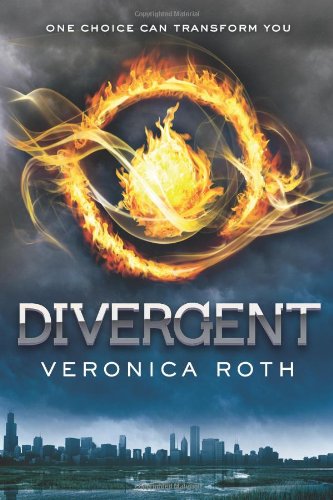
Review: Divergent by Veronica Roth

I have a confession to make.  I told it to my husband last night, and he gasped out loud (mockingly, I might add, because he is not a reader and probably never will be, to my great sorrow).

My name is Megan B., and I enjoy YA dystopian fiction.

I gotta admit it at this point.  I just finished reading my fifth YA dystopian book last night, and I liked it...and five is getting to be too big a number for me to keep saying that I don't read YA, or I don't like dystopian fiction.  Gotta embrace it, as our IT guy at work says.  A lot of people have laughed at me for liking Megan McCafferty's Bumped, I know.  But this...this book, I truly loved.

Veronica Roth's Divergent takes place in Chicago, years into the future, where the government has divided itself into sectors, factioning people by their natures and the attributes they feel are most beneficial to society.  The factions are Abnegation (the selfless), Amity (the peacemakers), Candor (the honest), Dauntless (the fearless), and Erudite (the intelligent).  At the age of sixteen, all members must make a very public choice -- to follow the faction in which they were raised, or to join a new faction and leave their old world behind.  Their choices are influenced by a pre-test that indicates where each individual would be best-placed.

The hero of Divergent is Beatrice Prior, an Abnegation-raised young woman who chooses to leave her faction and start a new life for herself as "Tris."  In her new faction, Beatrice struggles to find her true identity, while dealing with the residual emotions of the selfless community she chose to leave behind.  Underneath the surface of this new life lies the secret she took with her, and a gathering political storm that will change everything about Tris and the world she lives in.

A lot of people on Goodreads have been comparing Divergent to The Hunger Games trilogy, and although Roth has only published part I of her trilogy, I can see the similarities (somewhat).  Both are told from a first person POV, both feature female protagonists, and both are set in a futuristic dystopian society with a predilection for violence.  But.  I can also see where they (excuse the pun) diverge.

Tris is not Katniss, not by a long shot.  Katniss does not willingly throw herself into violence for no apparent reason; her motives for doing so are completely selfless.  Tris, on the other hand, has lived a whole life being selfless, and feels stifled doing so.  She knows when she leaves her faction that she is doing it for selfish reasons -- she wants to "be herself" -- and although she feels the pull back towards her selfless roots (almost constantly throughout the novel), she realizes that this was a change she had to make.  Their skill levels are much different as well.  Katniss is already a skilled archer and hunter when she goes off to the Hunger Games.  Tris is a small, weak-looking teenager with no survival skills whatsoever when she leaves her faction.  She still needs to learn everything she will need.

The testing scenes were similar (both Katniss and Tris must prove their worth and be ranked during an "initiation period") and I could see where people would draw those conclusions.  But Katniss' initiation period takes place over a couple of chapters, whereas Tris is struggling to better herself throughout the entirety of the book.  In Hunger Games, the initiation is a build-up to the action; in Divergent, it is the action.

The male protagonists in Hunger Games are eminently more likable than in Divergent (to a point).  Many people argue "Team Gale" or "Team Peeta" but there are no teams in Divergent.  When it comes down to it, Tris is a one-man woman (and I won't say anything else for risk of spoilers).  When it comes down to it, I really like the lack of a romantic triangle, which I feel has been beaten to death since the Twilight saga came out.  I'm really hoping that Roth doesn't introduce another male love interest in the second or third books...but I have a feeling she will.

I loved DivergentLoved it, and I can't wait until the next book comes out.  In 2012 *cries*.  I don't want to wait that long.  

Rating: *****

Wednesday, May 18, 2011

Review: Bumped by Megan McCafferty

Confession: I am not usually a fan of dystopian literature.  Or of young adult literature.  Or at least, I thought I wasn't, until 2011.  The last "YA" books that I read were Twilight and the Princess Diaries series.  We all know my feelings on Twilight, I doubt that I need to go over it again; and as for the Diaries...I found myself liking them less and less the further on I went.  I liked the originals, but as time went on, Princess Mia's lack of character development really started to chafe on me...but this isn't a review of Diaries.  This is my four dystopian-YA lit book review of the year (after all three books of The Hunger Games series).

In Megan McCafferty's Bumped, it is the year 2036, and the United States has been stricken with a virus that renders everyone over the age of 18 infertile.  For the first time in history, teen pregnancy is not only encouraged, it is a booming (and expensive) marketable enterprise.  Sixteen-year-old, separated-from-birth twins Melody and Harmony find themselves on opposite viewpoints regarding the business of giving birth.  Ambitious Melody is days away from sealing a contract that will give her a six-figure deal and a guaranteed position at a prestigious college in exchange for "bumping" and giving a couple her baby.  Virtuous Harmony has come to visit her sister, determined to help her find faith in God and realize that bumping for pay is a sin.  But a case of mistaken identity sends the two girls into tailspin, forcing them to admit to each other what they have never been able to give voice to on their own.

This book is (there's no other way to put it) a very quick read.  I bought it around 6 PM last night and I finished it this morning.  With cliffhangers at the end of nearly every chapter, it is nearly impossible to put down.  Unfortunately (and I expected this), the end is a cliffhanger as well -- McCafferty is said to be writing the sequel to Bumped right now, but since the book just came out at the end of April, I think it's going to be a very long time before the next installment of the saga of Melody, Harmony, and everyone else in their universe.

The biggest hurdle I had to overcome in reading Bumped is the futuristic language.  The world that McCafferty has created is wholly different from ours, where technology has literally taken over everything (except, ironically, bumping -- more on that later) and sometimes (especially in the beginning) trying to figure out what the characters are saying or doing can be difficult.  Once you clear the hurdles of the technical terms and slang, however, it's an easy read.

The book is eerie, not because it is so far-fetched, but because, as Bill Watterson once said in a Calvin-and-Hobbes strip, it's "not enough, really."  We talk today about the idea of being able to create life in a petri dish, or "test-tube babies" -- a world where sex-based procreation no longer exists, because it is unnecessary.  McCafferty envisions another world -- a world where sex is mass-market, where pregnant teens are the world's most expensive commodity, where safe sex is a myth and "everyone is doing it" isn't just a slogan, it's a way of life.  And yet, for all the sex that is going on, the emotions are cut right out of the act itself.  Even though sex is rampant, the heart of it is out.  "Lovemaking" is obsolete, even something to be scorned; a girl's worth is determined by how fruitful she is and what her genetic makeup will provide in the way of children; men are deemed worthless if they are missing a couple of inches in height or if their IQs aren't top-notch.  We talk constantly about "preserving the sex act" but in McCafferty's world, the sex act is preserved but emotionless -- leading me as the reader to imagine "what if we went in the opposite direction?"  Is it all that far-fetched, really?

As for character development: I have to admit that at first I did not sympathize with either Melody or Harmony, since they make themselves so very unsympathetic in the beginning of the book.  Melody comes across as a jaded opportunist, a girl who is willing to sell her soul and integrity for six figures and a good college.  Harmony is an insipid Bible-thumper, parroting what she has been told her whole life, someone to be completely ignored and overlooked.  Yet as the book progressed, and each girl endures her own tests and trial by fire, so to speak, the character development was impressive, and I found myself liking both girls immensely.  In regards to the back-up characters, with the exception of one, they were all completely zombified, toeing the party line on bumping and pay-for-pregnancy.  It was hard to relate to any of them, but I think that's where McCafferty was going with it.

I enjoyed Bumped very much, and I will be on the lookout for its sequel, whenever that day comes.

Rating: ****

Sunday, January 23, 2011

Review: Mockingjay by Suzanne Collins (also, wrap-up of The Hunger Games series)

So, here we are.  At the end of a trilogy.  The last book.  The end.

Unfortunately, when it comes to good books and characters we come to love, we all want happy endings.  The problem is, they're not practical.  Especially when they come at the conclusion of a particularly dark tale, such as The Hunger Games.

By Mockingjay, Katniss Everdeen has already been to hell and back.  Now she is forced to bear the weight of an entire nation on her shoulders.  Portrayed in the mass media as "the Mockingjay" -- taking the moniker of the only animal to live outside control of the totalitarian government of their society -- Katniss finds herself walking a fine line between hero and scapegoat of the people who support her.  The realization that she is now responsible for hundreds of thousands of souls, all pushing her to lead them -- as well as for the deaths of many innocents -- is a weight almost too heavy for Katniss to bear.  Yet she must fight on, now more than ever, since the one person who believed in her the most is now at the mercy of the cruel tyrants whom she opposes.

Mockingjay is easily the darkest and most heartbreaking of the trilogy.  The author of one of the blogs I follow finished this a few days before I did, and mentioned that she was in tears for most of it.  I didn't believe that I would be.  Ha.  Pride goeth before a fall.  This volume, especially the final few chapters, is moving and heartbreaking.  And without spoiling anything, I warn you here, as author William Goldman did in The Princess Bride -- "some of the wrong people die."  Yet, I'd be remiss if I said that the entire book is dark, with no redemption or light.  There is both, but it comes with a price.

I am so thankful that I finally listened to my cousins Mel and Jen, my aunt Cathi, and oh, everyone else in the literary world, and picked up this series.  I loved it, from start to finish, and I was completely glued to it.  I read three books in three days.  It was excellent.  I highly recommend all three.  Please do go out and try them.

I laugh though, now, because I, like people on my friends list on FB and Goodreads, are left wondering "What to read next?"  Finishing up a series of books is always difficult, even when some things are tied up.  You've come to identify with the characters.  You're left feeling that something's amiss.  Where do you go from here?

Well, I don't know about everyone else, but today I pulled out that most famous trilogy, The Lord of the Rings.  I made it through one of the books like, four years ago, but now I'm determined to finish them all.  I started The Fellowship of the Ring today.  We'll see where this takes me.

But I really will miss The Hunger Games.  Until I read it again, that is.  :)

Rating: **** (for Mockingjay), **** 1/2 for the trilogy as a whole)

Saturday, January 22, 2011

Review: Catching Fire by Suzanne Collins (Book 2 of The Hunger Games Trilogy)

The second part of a trilogy is bound to be difficult, for writer, for poet, for filmmaker, and for the audience.  A delicate balance must be achieved.  The creator of the trilogy has to give the audience enough to satisfy their curiosity, but leave enough questions unsolved that the audience has no choice but to continue.

Like many other "second of three" stories that come to mind (J.R.R. Tolkien's The Two Towers, or the film The Empire Strikes Back from the Star Wars Trilogy, Catching Fire is dark.  It has to be.  In the final pages of The Hunger Games (its predecessor), the heroine, Katniss Everdeen, through desperate means, has done something so unexpected and revolutionary, that she has accidentally thrown the inhabitants of her world into a deadly combat, from which there is no escape.  And for her actions, the powers that be decide, she must be punished.

I was not expecting a happy ending.  You really can't, from a second-of-three.  Catching Fire, like The Hunger Games, leaves you on the edge of your seat, constantly wondering what's going to happen next to Katniss and the others.  It is a fast-paced story of survival in the face of the impossible.  And yes, it does leave you hanging.  Shortly before dinner last night, I found myself on Instant Messenger, begging my cousin Jennifer to send me the third and final book in the series, Mockingjay.  I started it last night -- and since I am home today, with a relapse of my spinal pain -- expect a review tomorrow.

Catching Fire is good, but I liked it a little less than The Hunger Games -- if only because it does leave so many questions unanswered.  But of course, this is to be expected.

Rating: **** and 1/2

Friday, January 21, 2011

Review: The Hunger Games by Suzanne Collins

I don't read a lot of YA literature anymore.  I've already talked about the hate/hate relationship I have with the Twilight saga, and it frustrates me that any time I walk through the YA section of a bookstore, every single book features vampires or other supernatural beings.  Maybe the tweens are lapping this up, but I'm certainly not.  Which is why, when The Hunger Games first appeared on my radar, I figured I wouldn't read it.  Some gentle coercion from my cousins and aunt, as well as almost everyone on The Nest Book Club singing its praises, I took the plunge.

This book is great.  Like most books in a series, it has a cliffhanger ending that leaves you -- or at least me -- unsatisfied.  I had to start the sequel (Catching Fire) last night because I really want to know what happens next.

What (in my opinion) makes Hunger Games so amazing?  It caters to people of all ages and both sexes.  Kind of like Harry Potter.  I discovered yesterday that the 8th grade class in the school across the street is reading this as part of their curriculum.  I also have friends and relatives of all ages raving about it.

Someone on Youtube asked "Is Hunger Games the next Twilight?"  I will try to keep my bias and my loathing for Twilight out of my opinion of this comparison.

It is true that both series have exploded onto the YA literary scene.  Both are written for juveniles but captivate readers of all ages.  Both are written from the first-person perspective of the female protagonist.  But there is a fundamental difference between Hunger Games and Twilight, and that is, strikingly, the female protagonist.  Twilight's Bella Swan is a mincing damsel-in-distress who is ready to sacrifice her whole future for love, despite the fact that she is only 17.  She deliberately puts herself in harm's way, just so that her hero can rescue her, over and over again.  The heroine of Hunger Games, Katniss Everdeen, is as far from the female archetype of damsel-in-distress as possible.  Katniss is only a year younger than Miss Bella Swan, but she is head and shoulders above her in emotional maturity.  Her one major goal in life is to protect her loved ones.  Katniss has no time for romance.  Admittedly, she deliberately puts herself in mortal danger...but it is only to protect the person she loves more than anyone in the world -- her little sister, Prim.  In Hunger Games the protagonists are role models of unselfishness and self-reliance.  Not so much Twilight.

IMHO, Hunger Games rates head and shoulders above Twilight and most YA literature of the twenty-first century.  I can't give a complete summary until I've finished the last two books in the trilogy, but considering that I'm 22% done with Catching Fire...I have a feeling that won't be too long in coming.

Rating: *****

Thursday, January 13, 2011

Review: Don't Die, Dragonfly by Linda Joy Singleton

To any and all people in New England -- that was one hell of a snowstorm, no?  Schools in CT are STILL closed today, even though the sun is out and shining and the roads are clear, but I am back to work.  There is about three feet of snow on the ground.  I wish I had brought my camera to work today, the snow on the brownstone church is beautiful, like something out of an old-fashioned picture.  But it's also bitterly cold out today -- not sure of the temp., but definitely cold enough that I don't want to go out in it!

My "snow day" yesterday was great.  I got to relax my poor spine, and finish three of the four books on my "currently reading" list on GoodReads.  I also started two new ones (I like to have a little variety on my plate when I read).  So I'm going to review one of the books today, and the other one probably tonight (when the husband is at his EMT class) or tomorrow.  Here goes.

Another free book from Amazon.com.  I downloaded Don't Die, Dragonfly by Linda Joy Singleton a few days ago, not expecting much from it.  I'm not a huge fan of the current YA literature.  I loved the Harry Potter series, I loathe Twilight, and I don't understand why 90% of the YA literature currently out is about vampires.  This book was blissfully devoid of vampires or the living dead, so I decided to give it a shot.  It's the first book in the "Seer Series" by Singleton, so I figured if I liked it, I'd give the others a shot.

I didn't like it.

The synopsis from GoodReads is this: After getting kicked out of school and sent to live with her grandmother, Sabine Rose is determined to become a "normal" teenage girl. She hides her psychic powers from everyone, even from her grandmother Nona, who also has "the gift." Having a job at the school newspaper and friends like Penny-Love, a popular cheerleader, have helped Sabine fit in at her new school. She has even managed to catch the eye of the adorable Josh DeMarco.  Yet, Sabine can't seem to get the bossy voice of Opal, her spirit guide, out of her head . . . or the disturbing images of a girl with a dragonfly tattoo. Suspected of a crime she didn't commit, Sabine must find the strength to defend herself and, later, save a friend from certain danger. 

The difficult part for me was in relating to the characters.  I don't think that, at 27, I am too far-removed from my teenage years to understand where an emo 16-year-old is coming from.  I couldn't relate to Sabine and I found it hard to give a crap about what she was thinking or doing, or her plight.  It's also really obvious that Singleton had Edward Cullen of "Twilight" in mind when she invented the character of Dominic.  Sullen, mysterious, and with a strange knack for always being there when Sabine needs him.  Although Sabine and Dominic don't hook up in Dragonfly, it's pretty obvious that Singleton is setting them up for true love in the next few books of the Seer series.

...which it doesn't look like I'll be reading.  The one thing I can say about this book is that it's quick; I read it from cover to cover in under two hours.  But it doesn't do anything for me.  I feel like I should keep this blog balanced, and read some more YA or contemporary fiction, so don't worry -- it's not all going to be history or historical fiction.  But I'll be steering clear of the rest of this series.

Rating: **

Wednesday, January 5, 2011

Review: Sweetie by Kathryn Magendie

I don't know about you, but for me, it's difficult to break out of my regular reading genre and go for a book that may not immediately pique my interest.  I've been scouring Amazon.com for free books for my Kindle, and just picking up anything that sounded even the slightest bit interesting, knowing that I'd probably get a few bad apples.

I.  Love.  This.  Book.

Proof?  I started reading it yesterday morning, before work.  I finished it in the afternoon.  It was THAT good.

Granted, at 216 pages, it's a rather quick read.  No matter.  I would have torn through this little gem regardless.

Sweetie is the first-person narrative of Melissa, a chubby, stuttering, nondescript girl whose wanderlust-driven father and hypersensitive, nagging mother have moved her all over the country in search of her father's "inspiration".  Recently moved to a small town in Appalachian North Carolina, Melissa finds herself the butt of every joke at school, until she befriends the skinny, blonde, uneducated, free-spirited girl who has no other name than "Sweetie."  It is Sweetie who encourages Melissa to "breathe slowly" and learn to stop stuttering, and leads her on an adventure all over the mountains of their little town.  Over time, Melissa develops her own self-confidence and begins to question everything around her, including the secrets that Sweetie is holding close to herself.

Any girl who has ever been teased or tormented at school (including yours truly, I feel compelled to admit) will relate to Melissa, and if they hadn't already, will wish that they had had a friend like Sweetie.  I loved this book, and I'm hoping Ms. Magendie writes more, so I can read those.  I'm so glad that I took a chance on it.

Rating: *****

Up next?  Well, I have a few on deck.

Oh, Richard III.  You absolutely devious S.O.B.  Why must you be so compelling for me to try and figure out?  I'm still sad that Alison Weir, my favorite author of all things English royalty-related,  has never put out a book about Richard the Third.  I read her book The Princes In The Tower last year, and it was good, but that was more about the luckless Edward V and his brother Richard of Shrewsbury, with very little about Richard except that he was totally evil.

My parents bought me Paul Murray Kendall's Richard the Third for Christmas this year, and I cracked it open last night.  It's long (608 pages), but I'm already to Chapter Three and the action is pretty good (how could it not be, at the forefront of the War of the Roses?), so I'm going pretty fast.  Admittedly, Kendall is a bit more dry than Weir, but we can't have everything in life, can we?  I'm hoping for better insight into the life of the man who is known as England's most wicked ruler.

And, on my fiction plate...

The Healer's Apprentice by Melanie Dickerson.  A play on the classic Sleeping Beauty fairy tale, set in medieval Germany, Apprentice is the story of a woodcutter's daughter named Rose, the apprentice of the town healer who is determined to prove herself and become a healer herself, to avoid marrying a lecherous old suitor.  I'm about 10% into this one, and I started it last night.  This looks like it's going to be another quick read, but considering that I'm reading it at the same time as Richard, I don't know if I'll finish it as quickly as I did Sweetie.

Finally, because I really want to start tearing through everything and anything by Jane Austen, and at my sister's suggestion, I have begun Pride and Prejudice, that quintessential of pre-Victorian romances.  I'm not far into it at all (maybe 2%), but I'm mostly listening to it on the text-to-speech function on my Kindle (how I love that thing).

Happy reading!