Showing posts with label Historical Fiction. Show all posts

Tuesday, January 24, 2012

Review: Madame Tussaud...by Michelle Moran

Being "back" in graduate school has driven home one key reality for me: I will not be reading as many "fun" books as I did last year.  I'm glad that I shortened my reading goal to fifty new (to me) books in 2012, rather than the 100 I did in 2011.  There is no way I'd be able to complete an average of two books a week right now, especially when I'm doing so much reading for my classes.  Don't worry; I promise not to review a book I read for class unless it's really stellar.  That being said, here's (probably) my last "fun" read until further notice: Madame Tussaud: A Novel of the French Revolution by Michelle Moran.

Madame Tussaud, the sculpture of an elderly woman who greets customers at Madame Tussaud's Wax Museum in London, takes on the form of practical, ambitious Marie Grosholtz, a woman in her mid-twenties in pre-Revolutionary France, making a living off her uncanny ability to create exact wax portraits of people.  After an introduction to the royal family, Marie is invited to work as a tutor to the king's sister, Princesse Elisabeth, in Versailles, where she makes friends and finds herself sympathetic to the royals.  But when the Revolution breaks over France, Marie is forced to choose between loyalty and life, ambition and love.

I feel like I would have gotten through this book a lot faster if I hadn't had four days' worth of homework to do.  It is a relatively quick read, and I did enjoy it as a work of fiction.  I'm glad that Moran added the tagline "a novel of the French Revolution", because there are major historical inaccuracies present, especially around the relationship between Marie and her supposed beau, Henri Charles.  

My other bone to pick with this book is the "tell, not show" policy that Moran utilizes in this story, and that is, I've found, a major problem with writing historical fiction from the POV of a female character who was largely relegated to the outskirts of the political arena.  Most of the book is Marie's reaction to political events that she finds out about through newspapers, friends, or relatives -- she was not an eyewitness to most of it.  While I applaud Moran's decision to not take liberties with history, it doesn't make for particularly exciting literature.  One GR's critic said she wished that she had read more eyewitness descriptions, rather than breathless retellings from people who happened in on Marie in her workshop.  This was a problem I had with The Tudor Rose by Margaret Campbell Barnes.  Barnes set out to write the story of Elizabeth of York, wife of Henry VII and mother of Henry VIII of England, and while she did a great job of "telling" the history of what happened, she was hampered by the simple fact that Elizabeth was little more than a spectator at most of the great events that happened in her lifetime.  That is the problem that Moran also runs into with Madame Tussaud.

Overall, I enjoyed it for what it is: a re-telling of the events of the French Revolution through the eyes of one of its spectators, but not one of its main contributors.

Rating: ****

Saturday, January 14, 2012

Review: The Summer Garden by Paullina Simons

We're home!  David and I went on a cruise this past week with my MIL (Donna), BIL (Bryan), FSIL (Christine), and cousin-in-law (Amy).  It was awesome!  I have tons of pictures but they will be for the next few entries.  Today I'm going to do a wrap-up of the trilogy that I was reading when last I posted, with book three of the trilogy and my second new book of the year -- The Summer Garden by Paullina Simons.

Note: This review contains spoilers of The Bronze Horseman and Tatiana and Alexander.  If you haven't read them, get yourself to a bookstore and skip this review.

World War II has finally ground to a close, and Tatiana and Alexander have been miraculously reunited with each other and sent "home" to the United States of America, to begin their lives together as Alexander and Tatiana Barrington, with their four-year-old son, Anthony.  Still only in their twenties, they have decades of life left.  Except that war has aged them prematurely, they have spent only one month together since their marriage five years ago, they hardly know each other, and both are still haunted by the terrors inflicted on them by Nazi Germany and the Soviet Union.  When their original belief was that they had only a month of marriage to enjoy, what happens when they try to make a lifetime together, to live the American dream, having no idea how to relinquish the past?

Several people said that they were disappointed in this book -- that the passionate love story of Tatiana and Alexander was tainted with the cold hard facts that age, war, conflict, pain, can whittle away at true love until it is brittle and breaking.  I was not crushed.  While I was sad to find that their "true love" of TBH and T&A was changing, that was real.  It was unrealistic to expect Alexander to remain the same person after years shackled and beaten at one prison or the next, or to think that Tania would never carry any lasting pain and misery from losing her entire family during the seige of Leningrad.  To watch them struggle and learn to live with each other was maybe not as "romantic" as the previous two novels, but it was real.

I do wish the book had been about 20% shorter.  I didn't really care that much about their son, Anthony, nor about his military career or Vietnam or any of that.  I felt that once their children started growing up, the story sort of went all sorts of haywire.  But that's a personal preference.

I'd give TSG 3.5 stars, and the whole trilogy an overall rating of 4.

Rating: *** and 1/2

Friday, January 6, 2012

Review: Tatiana and Alexander by Paullina Simons

Having finished The Bronze Horseman as my last book of 2011, I eagerly jumped into the sequel, Tatiana and Alexander (formerly called The Bridge to Holy Cross).  I didn't really know what to expect, considering that the first book was so action-packed (and left on quite the cliffhanger).  I didn't think T&A (ha, I'm five) could top it.  Well, call me a liar, because I loved it even more, and it is my first finished book of 2012.

NOTE: There are spoilers from The Bronze Horseman in this review.

From Goodreads: Tatiana is eighteen years old and pregnant when she miraculously escapes war-torn Leningrad to the West, believing herself to be a widow. Her husband, Major Alexander Belov, a decorated hero of the Soviet Union, has been arrested by Stalin's infamous secret police and is awaiting imminent death as a traitor and a spy. Tatiana begins her new life in America. In wartime New York City she finds work, friends and a life beyond her dreams. However, her grief is inescapable and she keeps hearing Alexander calling out to her. Meanwhile, Alexander faces the greatest danger he's ever known. An American trapped in Russia since adolescence, he has been serving in the Red Army and posing as a Soviet citizen to protect himself. For him, Russia's war is not over, and both victory and defeat will mean certain death. As the Second World War moves into its spectacular close, Tatiana and Alexander are surrounded by the ghosts of their past and each other. They must struggle against destiny and despair as they find themselves in the fight of their lives.

This book had everything, everything I could have asked for.  Told from both Tatiana's and Alexander's points of view, each thinking of the other as they slowly struggle through separate lives -- Tatiana as a nurse on Ellis Island in NYC, and Alexander in one terrible prison after another -- this book is chock-full of emotion, pain, and redemption.  Most of Part I of the book is backstory about Alexander's life and how his idealistic Communist parents defected from the United States to the Soviet Union, only to have their dreams crash around them.  So much of Alexander's story is glossed over in TBH, and I was so satisfied with the complete explanation in T&A.  Tatiana's story, in America, is just as interesting, as she struggles to put together a life for Alexander's baby son, trying to get over the death of her husband while not totally believing that he really is gone.  

I admit that I cried near the end of this book, too.  The last fifty pages or so are extremely fast-paced, and I tore through them all this morning just to find out what happened to Tatiana and Alexander.  The ending was brilliant, I loved it.  And I can't believe that Simons has more in her for a third book.  

...Which I will hopefully be reading on vacation.  My darling husband, who never reads EVER, decided after seeing a preview that he HAD to read The Hunger Games (which I read and loved last year), and so he has stolen my Kindle.  He's pretty far into it right now (he started Mockingjay yesterday), but I think I'm going to have to snag my sister's paper copy so that I can have my Kindle back and download The Summer Garden before we go on vacation on Sunday.  

As to vacation, this is my LAST day of work until January 17th!  I could not be more psyched.  Although I got a massive guilt-trip last night, as I was sorting through things to bring in my carry-on.  Ollie decided that he wanted to jump in and come with us on vacation.


Nothing makes you feel guilty like an adorable fat kitty.

Rating (for the book AND the cat): *****

Saturday, December 31, 2011

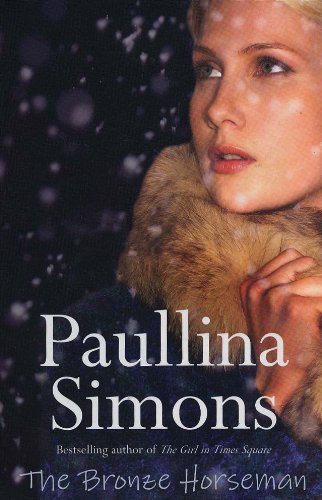
Review: The Bronze Horseman by Paullina Simons

I thought I would be good, hold off, make this book #1 of 2012.  And then there came a point of no return, I had to finish it.  So it is book 101 of 2011, and the last book: Paullina Simon's The Bronze Horseman.

(From now on, instead of writing my own synopsis, I'ma copy the one from Goodreads)

Leningrad 1941: the white nights of summer illuminate a city of fallen grandeur whose palaces and avenues speak of a different age, when Leningrad was known as St Petersburg. Two sisters, Tatiana and Dasha, share the same bed, living in one room with their brother and parents. The routine of their hard impoverished life is shattered on 22 June 1941 when Hitler invades Russia. For the Metanov family, for Leningrad and particularly for Tatiana, life will never be the same again. On that fateful day, Tatiana meets a brash young man named Alexander. The family suffers as Hitler's army advances on Leningrad, and the Russian winter closes in. With bombs falling and the city under siege, Tatiana and Alexander are drawn inexorably to each other, but theirs is a love that could tear Tatiana's family apart, and at its heart lies a secret that could mean death to anyone who hears it. Confronted on the one hand by Hitler's vast war machine, and on the other by a Soviet system determined to crush the human spirit, Tatiana and Alexander are pitted against the very tide of history, at a turning point in the century that made the modern world.

This book destroyed me, in every way.  I started it on Wednesday, and I was powerless to put it down.  As much as I wanted it to be my first book of 2012, I just couldn't hold out, and here it is.
The love story is true, and harsh, and beautiful.  So many times I got enraged at the forces that were keeping Tatiana and Alexander apart, wondering when they would work things through.  The end of the book killed me; I cried as hard as I did when I was six years old and saw the original Little Mermaid (I didn't realize that in the non-Disneyfied version, she kicks it).  There is hope, though -- I bought the sequel, Tatiana and Alexander, today and I'm starting it tomorrow.

The only -- ONLY -- problem I had with this book was the 70-page break for love scene upon love scene.  It really hindered the plot.  But once you got past that, it was amazing.  Really, I can't recommend this book enough.

Rating **** and 1/2

Wednesday, December 14, 2011

Review: The Romanov Bride by Robert Alexander

While I won't take back my negative points on the review of Robert Alexander's The Kitchen Boy, I have to say, with this second of his books, he has absolutely, totally and completely redeemed himself in my eyes.  THIS book is everything I wanted in a historical fiction, and more.  Number #95 for the year (five left!  Five left in 17 days!  I have hope!) is The Romanov Bride.

Alexander tells the story of the beautiful Elizabeth Romanov, called "Ella" by her family and friends, a minor German princess who marries Sergei Romanov, the uncle of Tsar Nicholas II.  Born and raised by her mother to have a special care for the poor and ill, Ella is unable to shake her compassionate feelings, even managing to feel pity and love for her tyrranical husband as he rules her and the people of Moscow with an iron fist.  But when Sergei is assassinated by a revolutionary's bomb, Ella's life is transformed.  Juxtaposed with Ella's story is that of Pavel, a poor Russian worker whose revolutionary ideas are fueled by his hatred and grief over the senseless murder of his young wife on Bloody Sunday.  Pavel is determined to bring down the House of Romanov, no matter what the cost.  But his interaction will Ella will, unwillingly, change his life.

This book is splendid, exactly what I love about historical fiction.  There's a fascinating historical figure -- Ella -- and an original character invented by the author to cause a counterpoint -- Pavel.  I'm not usually a fan of multiple points of view in a novel, but the two characters are so strikingly different, and both really contribute so much to the tale.  Here we see the Russian Revolution from both sides -- the monarchist (Ella) and the communist (Pavel).

Ella is a lovely character -- there is nothing to hate about her, in fiction or in truth.  There is a reason why she was later canonized as a saint in the Russian-Orthodox Church, yet for all her saintliness and humility Alexander still manages to make her human.  Pavel is definitely relate-able -- his heartbreak, followed by rage and lust for revenge are all too well understood in this day and age.

This book is wonderful.  My only regret -- that one of the children that Ella and Sergei "adopts", Dmitri, is never fully explained.  This book contains many references to Grigori Rasputin and his part in the fall of the Russian Empire, and Dmitri was one of his murderers.  Alexander never fleshes out this little tidbit of information, which mystifies me, for I'm sure he discovered it during his thorough research.  Still, nonetheless, amazing work.

Rating: **** and 1/2


Monday, December 12, 2011

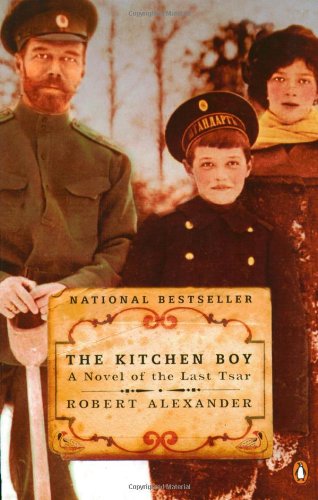
Review: The Kitchen Boy -- A Novel of the Last Tsar, by Robert Alexander

Book #92 is the third book of the year involving the Russian Revolution, and the second of pure fiction -- but the first that I really was getting into.  

The Kitchen Boy: A Novel of the Last Tsar, by Robert Alexander, is a historical fiction novel written in 2003, four years before the ultimate fate of the Romanov family was revealed.  An elderly Russian emigre named Mischa records the tale of his escape from Russia following the Revolution, when he was a young kitchen boy named Leonka, serving the deposed Tsar and his family during their last days at the Ipatiev House in Ekatrinburg.  As the youngest person in the little "family" made up of royals and their servants, Leonka comes and goes as he pleases, without raising suspicion amongst the Red Army guards or their leader, the cunning and heartless Yakov Yurovsky.  But when one of Leonka's missions goes awry and the guards take action, Leonka is left with an incredible sense of guilt -- and a secret that even eighty years later he can't bear to reveal.

SPOILER ALERT.

I really liked this book, until the last two chapters.  Mischa's story about his life in Ekatrinberg as the kitchen boy Leonka was riveting, and my favorite kind of historical fiction -- the kind that you know isn't true, but the kind where there's no evidence to prove it wrong.  There really was a kitchen boy to the family of Tsar Nicholas II in captivity, and his name was Leonka -- he was around the same age as the Tsar's son, Alexei, and he was the only one of the servants who was not taken to the basement and shot to death.  I thought that the story was absolutely riveting, as well as how neatly Alexander ties up the fates of the two missing bodies, those of Alexei and the Princess Marie Nicholaevna, the Tsar's third daughter.

And then came the final chapter, about Mischa's granddaughter Katia going to Russia after hearing his story, and discovering that Mischa's whole tale was a lie -- he was not the kitchen boy, Leonka, but a soldier in the Red Army who was in the basement that night, carrying out the execution.  Instead of watching the horror from outside the Ipatiev House, he was the soldier assigned the task of executing the Princess Marie.  Wracked with guilt following the brutal murders, he saw two bodies bounce out of the lorry traveling to the burial spot -- those of Alexei and Marie -- and realized that Marie was still alive.  Given one chance to redeem himself, Mischa saved Marie, took her to America, and made her his wife.

I hate to say it, because so many people loved it, but this ruined the book for me.  It's a wonderful story, but that's just the point -- it's a story, and was so far-fetched it didn't even seem plausible.  That a Red Army soldier at the time of the Revolution would risk his life to save a dying Romanov grand duchess is romantic and interesting, yes, but impossible to conceive, and impossible to imagine him getting away with it.  My disappointment primarily stems from the fact that I thought this was going to be a plausible historical fiction book, and went along with believing Mischa's story (as Leonka) the whole time.  I'm not a fan of the deus ex machina tool in writing, where the reader can't figure out the story by him/herself, and that's probably where my feelings of negativity come from.  Still it's well written, and I'll be picking up some more of Alexander's books.

Rating: ***

Monday, November 28, 2011

Three book reviews (because I really can't be bothered right now)

I'm telling you, I'm super sick of these book reviews (this is mainly because I've been knitting more and I could really not care less about the reviews now).  I remember all the way back in January, when I got so excited and really put thought into my reviews...and now it's December, I've read 89 books (11 from my goal!) and I just Do Not Care anymore.  I am so far behind in my book reviews now that I'm going to be doing THREE in one entry today...and that's okay.  Because I make the rules on this blog.

Review: Henry's Blog by Elizabeth Newbery (#87)
 My little sister just came back from a week-long, whirlwind tour of London, England, and brought me back this gem -- Henry's Blog: My Life in My Own Words, OBVS! by Elizabeth Newbery, found in the Tower of London gift shop.  It was meant as a gag gift, and I read it in one night.  Henry's Blog is an extremely short book, written in cyber-speak and blog form, through the eyes of King Henry VIII.  I still can't decide how I feel about it.  The humorist side of me thinks that it's hilarious (and so does everyone else who has read this, including my father) -- the idea of Henry giving his wives cyber-like nicknames (KatyA for Katharine of Aragon, AnnieB for Anne Boleyn and so forth) and talking himself up constantly.  The history major side of me weeps with the idea that kids will read this (it is obviously written for a young adult or teenager).  I went back and forth wondering if I should even count this is one of my books for the year.  But then something HUGE happened.  David read it.  Read a book.  All the way through.  And ENJOYED IT.  Clearly, that cemented it.  I have to give Henry's Blog a good solid three-star rating, simply for the hilarity factor, and readability (did I mention that my husband read it?  A real book?  Go figure!)
Rating: ***

Review: Knitting Rules! by Stephanie Pearl McPhee (#88)
This is my second Stephanie Pearl McPhee (otherwise known as the Yarn Harlot) book of the year -- I read The Secret Life of a Knitter back in January -- and I have to say, I enjoyed Knitting Rules! much more than Secret Life.  The Yarn Harlot is known as a "knitting humorist", but Knitting Rules! is equal parts funny and useful.  I've read it before, and I look at the big as one big pep talk for the anxious knitter, the one who is afraid to try new things, to pick up a skein of yarn and some needles and just go for it.  The Yarn Harlot's handy rudimentary sock pattern is also included with step-by-step (no pun intended) instructions -- a great tool for those knitters who are learning to knit socks for the first time.  I can't tell you how many times I've gone back over the pages when I've needed a little encouragement.  I recommend it to anyone who is interested in learning how to knit, or who could use a little boost every now and then, a reminder that "in the end, it's just knitting."

Rating: ****

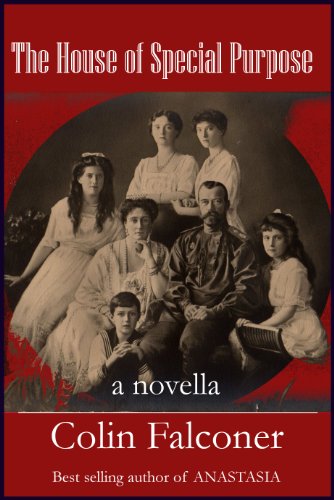
Review: The House of Special Purpose by Colin Falconer
Every so often (usually when I'm broke) I find myself perusing the "free Kindle books" link on Amazon.com.  The other day, this book caught my eye, because as a child I was obsessed with anything and everything to do with the Russian Revolution and the fate of the Romanov family.  "The House of Special Purpose" was the name given to the Ipatiev house in Ekatrinburg where the Romanovs spent their final days before they were executed.  Falconer wrote The House of Special Purpose as a prequel of sorts to his book Anastacia, a sort of "what if" about the fictional destiny of the most famous of the Romanov children, Anastasia Nicholievna.  It's tagline is "How was it possible for any of the children to have survived?  You won't believe the answer; except it's all true."

I don't know what I was hoping for, but this book was not it.  It was a chronicle of the last days of the Romanov family as seen through the eyes of Anastasia and some of the guards employed to imprison the family.  Falconer takes every negative story about Anastasia and makes her about the least sympathetic character in literature -- even her fiestiness seems petulant, cruel, and childish.  There are some vaguely pornographic descriptions and a scene of female rape (without historical accuracy' the author conjured it up himself, which just lead me to be disgusted and disturbed). The novella also suffers from supreme historical inaccuracy.  The cook, Kharitonov, is described as female, yet his real name was Ivan Kharitonov, and he was decidedly male.  Also, *SPOILER ALERT* the elephant in the room was the fact that in 2007 it was proved that none of the Romanov children survived the execution -- the remains of the missing two were discovered at last.  I wouldn't have been surprised with a novella such as this before 2007, but it was published in September of 2011.  

My final "beef" (if you could call it that) with this book was the tired theme, the implausible escape of Anastasia (or another Romanov child).  It's been done before.  It was done by the mysterious Anna Anderson and countless others in the 20th century.  There was a movie made with Ingrid Bergman and the Don Bluth animated film (which I must confess is one of my favorites, even though it's nonsense).  With great writing, it might have been pulled off, but the story has been done.  Time to move on to something else. 

Rating: *

Tuesday, November 22, 2011

Review: The Lion In Winter By John Goldman

The second play I read recently, and book 86 for the year, was The Lion In Winter by John Goldman.  I have seen the movie starring Katherine Hepburn and Peter O'Toole about 100 times, it is one of my favorites, and I finally knuckled down and read the play last week.

The Lion In Winter takes place at the twilight of the reign of King Henry II, the first Plantagenet king of England, at a fictitious Christmas court held in Chinon, English-occupied France, in 1183.  Henry has recently buried his eldest son and heir, Henry the Young King, and at age 50, with death encroaching upon him, he must make the decision of who among his remaining three sons should succeed him as king.  There is Richard the Lionheart, the eldest, cold, ruthless, and distant -- a splendid fighter who hates his father Henry as much as he favors his mother.  Second in line is Geoffrey, Duke of Brittany, a capricious schemer who resents his middle-child status.  Finally, there is John, who at sixteen is Henry's favorite, a stupid, spoiled, rapacious youth.  Thrown into the mix is the boys' mother, Eleanor of Aquitaine, dungeoned up for the last ten years after daring to lead a revolution against Henry II, set free for the Christmas court to once again scheme and plot against Henry for the crime of loving others more than her, and Philip, King of France, who has come to settle accounts with Henry for taking his younger sister, Princess Alys, as a mistress instead of marrying her off to Richard as previous agreed.  The play takes the term "family dysfunction" to new heights as Henry battles in vain to keep his empire intact.

This is a play of little action, and all talk, same as the film.  Nothing happens in the film, except for one two-minute battle scene in the first 10 minutes.  After that, it's all talking, back-biting, scheming, and sarcasm.  But it is great.  Henry's interactions with his wife Eleanor are the best as they fight and tussle, hating and loving each other indiscriminately.  The boys are equally as entertaining, as sympathetic as they are vile.  The only character that I think is judged unfairly is Princess Alys, relegated to a sniveling complainer for the entirety of the play.  A fantastic piece of literature, which leaves me hankering to watch the movie.

Rating: ****

Monday, November 21, 2011

Review: A Man For All Seasons by Richard Bolt

My sister Christina returned home from England in the wee hours of this morning, and during her vacation, I helped myself to two of the books in her ever-increasing stack of plays (my sister was a theatre student).  They were both on my "to-read" list, and now I have finished them both; they are #85 and #86 for 2011, both about English monarchs in very different times, and both very well-written IMO.  The first is A Man For All Seasons by Richard Bolt.

A Man For All Seasons is a play about the last few years in the life of Sir Thomas More, a lawyer, statesman, Chancellor of England, and after his death, a Roman Catholic saint and martyr.  An unlikely politician, More was promoted to the position of Chancellor of England at the insistence of King Henry VIII, towards the middle of his reign, around the time when he was angling for an annulment from his wife, Katherine of Aragon, in order to marry Anne Boleyn.  When More withheld his support for the annulment, on the grounds that the King had no right to break from the will of the Church of Rome, he provoked the King's displeasure, thus sealing his fate. 

More is a sympathetic character, a man who knows that he is doomed, yet is unable to sacrifice his conscience in order to save his life.  He is a celebrated character in many movies, books, and on television, yet he is generally a side character.  I thought that, in Seasons (having scene the 1966 film starring Paul Scofield as More), he was finally given a chance to shine in a starring role.  But in the play, this isn't the case.  More is once again relegated to a supporting character.  The "main character" in Seasons is the so-called "Common Man", who acts as narrator, manservant, rower, lawyer, judge, and executioner, all in one.  He has by far the most lines, and is the one who speeds the story along, so to speak.  He is noticeably absent in the film version.

The play is a bit dry in parts -- someone who isn't familiar with that period in history would be confused (I was the first time I saw the movie) -- and most of the supporting characters (the King, More's wife Alice) aren't portrayed in the best of lights.  Alice is relegated once again to a shrewish, sniveling woman, rather than the plain-speaking, yet loving wife she was known as.  More's relationship with his daughter Margaret is touched on, but only briefly -- his many other children are nonexistent.  I was also disappointed that his famous last words -- dying "the King's good servant, but God's first" -- are omitted from the play.

Yet, it is a well-written piece, and you can't help but admire Thomas More, whether Catholic, Protestant, or atheist, for his conscience and moral character.

Rating: ***

Friday, November 18, 2011

Review: Of Mice and Men by John Steinbeck

I am two books behind in my reviews, so they're going to be quick and short (again, I'm losing interest for these, and I'm sure nobody else cares).  Of Mice and Men, by John Steinbeck, was one of those books that I never read in high school or college, but felt that I should read, and it was #1 on my "to-read" list for much of the past year.  I finally borrowed a copy from my father and read it in 24 hours.

Of Mice and Men is more a short story or a novella than a novel.  Two ranch hands head across California during the Great Depression, looking for work and dreaming of better things.  George Milton is wiry, alert, and thinks of nothing but the better life that could be his.  Lennie Small is a lumbering, slow-witted animal-lover who never means to hurt a fly, but doesn't know his own strength.  In a world where every man must live for himself, these two thrive on relying upon each other, ignoring the oncoming tragedy which, in the end, is inevitable.

My sister warned me that this is "a tough book", and she was correct.  Not the writing style, not the length, but the content.  As an animal lover, reading a book that involves the death of several small, helpless creatures was difficult at best, and made it harder for me to sympathize with poor, dim-witted Lennie or feisty, harsh-mouthed George.  There aren't many likable characters in Of Mice and Men; besides Lennie and George, there's Curley, the blustering son of the ranch owner; his nameless, skank-tastic wife; and various other ranch hands and workers who play minor parts in the book.  The only real character I felt any sympathy for was Candy, the elderly, handicapped ranch hand, who is forced to give up his best friend (his old dog), foreshadowing the events of the rest of the book.

I liked Steinbeck's writing style, and I think I'd read another of his books, but I doubt I'll be reading Of Mice and Men a second time.

Rating: ***

Wednesday, November 16, 2011

Yarn Along! (11/16/2011)

It's been a really long time since I've participated in a Yarn Along over on Ginny's blog.  But today I'm going to!  I've been rolling out the Christmas/Yule knitting, and I have some WIPs today that I'm photographing.


To the left, you see the ETERNAL socks that I've been working on for-freakin'-ever...but they are mere rows away from slapping a toe on them and being done done DONE.  The yarn is Blue Moon Fiber Arts Socks that Rock Lightweight in "Cattywhompus".  Knit on US 2 dpns, they are coming out far too small for my own size 9.5 feet...but they will be a Yule gift for a dear friend of mine who has tiny feet that they will fit.  I think she'll love the color scheme as well.

To the right is the humble beginnings of The Giant Sock Yarn Blankie.  There are five squares knit together, but I have two more in my bag that I've put on hold for now, since I'm doing the Christmas knitting.  I have several other gifts I have to do, so I'm doing pretty much a square a day or less for now.  But I discovered a whole bunch more of sock yarn in my stash, so I'm going to be knitting on this quite a lot, I think, over the next few months.  It never seems to get old.

As for my book, I'm reading A Man For All Seasons, by Robert Bolt.  It is a play about Saint Thomas More, the chancellor and statesman under Henry VIII, during the last few years of his life.  It's very good so far -- I'm almost halfway through -- and I'm thoroughly enjoying it.

Happy Hump Day!

Monday, November 14, 2011

Review: To Kill a Mockingbird by Harper Lee

I am quite behind on my reviews lately, but that's okay because I'm honestly losing interest.  Not in reading, but in reviewing the books I finish.  After the end of the year (and with it -- hopefully -- the end of the 100 books), I'll probably be stopping, unless the book is something of extreme interest.  And that's something else -- most of the books I'm reading now are short, snappy ones that almost everyone I know has read.  What else is there honestly to say about To Kill a Mockingbird, book # 84 for the year?

Jean Louise "Scout" Finch's whole world revolves around the little town of Maycomb, Alabama, and its dry-as-dust inhabitants: Miss Maudie Atkinson, the colorful gardener who is her main inspiration for becoming a lady; Arthur "Boo" Radley, a mysterious hermit whose malevolent presence has terrified Scout and her brother Jem since birth; and her beloved father, lawyer Atticus Finch, who is about the blow the town apart by agreeing to defend a Negro man accused of raping a teenage white girl.  As consequences pile up around them, and the little town is turned upside-down, Scout's eyes are opened, not only to the people around her, but to the state of the nation as a whole.

This is a book that almost every high school student in America reads at one point or another.  I myself read it as Summer Required Reading when I was going into my junior year of high school.  It is one of my favorite books, and I'm pretty sure I've memorized parts of it.  Is there anyone who has read this that doesn't love Atticus Finch?  The book is written from the POV of Scout, but this is Atticus' story, more than anyone else's, as he is the major protagonist (and causes much of the action).  A great story, and a must-read.

Rating: *****

Friday, October 28, 2011

Review: Slaughterhouse-Five by Kurt Vonnegut

The fun thing about this "100 books in 365 days" thing is that it's prompting me to read books that I was never forced to read in high school or college.  Slaughterhouse-Five is one of those books for me.  I never had to read it in high school, but had it described to me many times by classmates and friends.  When it dropped down to $4.27 on Kindle last week, I thought, what the hell, I'll take a chance.  And I did.  Number 80 for the year (we're getting so close to the end!) is Kurt Vonnegut's absurdist tale of war and its repercussions.

Slaughterhouse-Five's narrator (Kurt Vonnegut himself) is a veteran of World War II trying to write a story about his experiences in the firebombing of Dresden, Germany.  But instead, he makes himself only the bit-part in the tale of the tragic Billy Pilgrim, a student of optometry who is drafted into the war and finds himself woefully unprepared for the horror that greets him when he arrives in Europe.  Ridiculed by his fellow soldiers, he is captured by the German army and taken as a prisoner of war to the makeshift prison known as "Slaughterhouse-Five" in Dresden, a quiet city of seemingly little import.  There Billy lies adrift in a sea of fantasy as the city collapses around him in a firebombing worse than Hiroshima and Nagasaki combined, surviving to return to the United States a different person, wholly altered, trying to find his way in a world that does not understand him.

It took me a few pages to wrap my brain around the fundamental illness that was plaguing Billy Pilgrim -- post-traumatic stress disorder, or PTSD.  Known and understood now, after so many veterans of the Vietnam conflict returned home with such a diagnosis, it was virtually unheard-of during World War II.  Anyone who has seen the George C. Scott film Patton will remember the difficult scene where Patton screams at a young soldier that he finds huddled and sobbing in the hospital tent, accusing him of cowardice in the face of the enemy.  We've all heard stories of veterans "hitting the deck" when they hear a loud noise, or experiencing flashbacks to the Asian jungle, or any number of other horrific experiences.  But Billy Pilgrim takes it one step further -- he really believes that he has the ability to travel through time and space, and spends much of these travels on the far-away planet of Tralfamadore.  There he creates an alternate reality; instead of being a ridiculous optometrist-turned-soldier, he is a being both mysterious and respected.  Instead of having an overweight, foolish wife, he sleeps with a beautiful movie star every night.  Tralfamadore gives Billy a world he can understand, while providing a safe haven from the world he has never felt comfortable in.

I loved this book.  It's not my favorite ever, but I think it was a sad, but excellent description of the hell that post-traumatic stress disorder wreaks upon individuals, and how, if unchecked, it can drive them to create an alternative reality from a world too painful to confront.  It made me sad whenever someone in the book dismissed Billy as "ridiculous", "insane", or "demented".  To a 21st-century mindset, it was obvious what was hurting Billy and making him the way that he was.  Had he been alive (or, you know, real) today, hopefully he could have received the help he needed, rather than ridicule and dismissal.

Rating: ****

Tuesday, October 11, 2011

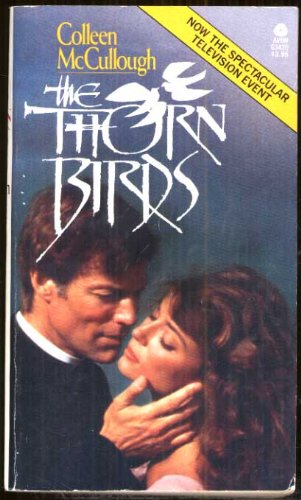
Review: The Thorn Birds by Colleen McCullough

Every so often, a truly remarkable book comes to those of us who love to read.  It's a book that we may not think much of when we first read it, but slowly, over time, it becomes more than just a book.  That is what Colleen McCullough's saga The Thorn Birds is to me.  Maybe it was part destiny -- being born in 1983 (the year the novel was adapted into a miniseries) and being named after the main character, maybe I was meant to love this book.  I've read it at least a dozen times, and I always come back for more.

Set in Australia in the first half of the 20th century, The Thorn Birds is the chronicle of a poor New Zealand-Irish family who strikes it rich when their elderly aunt wills them her home, a sheep ranch by the name of Drogheda.  The only girl in a burgeoning family of sons, Meghann "Meggie" Cleary, rails against the confines of her Catholic upbringing to pursue the love of the man of her dreams.   Fr. Ralph de Bricassart, the object of her affection, is a priest whose love for Meggie is surpassed by only one thing -- his ambition to be the "perfect" priest and a Cardinal of the Church.  Thrown together and torn apart repeatedly by love, ambition, and rules, their story comes to an abrupt turning point when Meggie takes her fate into her own hands to steal what little happiness she knows she can, with results and consequences that neither she nor Ralph could possibly foresee.

To me, this is one of the greatest "love stories" of all time.  The conception of a Catholic priest falling in love with a young woman is as old as time itself, and Thorn Birds has an almost Romeo and Juliet quality to it.  Why does Ralph push Meggie away and pursue the priesthood when he loves her so?  Why does Meggie go back to Ralph repeatedly when he brings her nothing but misery in denying her?  The difference between Thorn Birds and Romeo and Juliet is deliberation.  In Shakespeare's classic tragedy about imprudent child lovers, the titular hero and heroine are too young and foolish to realize the dire consequences of their actions.  In Thorn Birds, Ralph and Meggie (especially Meggie) realize exactly what they are doing, and why, and the consequences of their actions if they are discovered.

The theme of the book -- suffering great pain to achieve one's heart's desire -- is one that resonates with me more than ever, through the years.  McCullough's writing is beautiful and meaningful.  The last paragraph, even thirteen years after my first reading, still rings with its message:

"The bird with the thorn in its breast, it follows an immutable law; it is driven by it knows not what to impale itself, and die singing.  At the very instant the thorn enters, there is no awareness of the dying to come: it simply sings and sings until there is not the life left to utter another note.  But we, when we put the thorns in our breast, we know.  We understand.  And still we do it.  Still, we do it."

Rating: *****

Friday, September 23, 2011

Review: Shogun by James Clavell

September is going to go down in infamy this year as being the month where I read the least amount of books, but perhaps the most amount of pages.  All due to the ambitious project this book has been.  I started reading it on September 2nd, and it took me twenty days to finish, longer than any other book this year.  But clocking in at a mere 1152 pages, this was not an easy undertaking.  Book 75 for the year is James Clavell's Shogun.

In the year 1600, an English pilot, John Blackthorne, accidentally steers his Dutch ship into a storm, and the crew is wrecked upon the cost of Japan.  They are taken prisoner in a strange land, where the speech is alien, men lose their heads for simply disrespecting their betters, and there is no greater sin than that of shame.  Through a streak of luck, Blackthorne finds himself at the hands of the warlord Toronaga, whose interest  in the English "barbarian" drives him to instruct Blackthorne to learn Japanese through the tutelage of the beautiful Lady Mariko.  But Japan is divided by two warlords, Toronaga and Ishido, during the minority of the future Emperor of Japan, and only one of them can win the top prize and become Shogun, supreme military dictator of Japan.  Blackthorne finds himself and his ship are pawns on the formidable chess game between two feudal lords, where only one can win. 

I was first introduced to Shogun when I was a young teenager, through the miniseries starring Richard Chamberlain as John Blackthorne and Toshiro Mifune as Toronaga.  It is a haunting, sad story about a man completely marooned in a foreign land, unable to speak the language or understand the culture, yet finding himself of vital importance to the political situation at hand.  Blackthorne is a pitiable character in the beginning of the novel -- he suffers as he is humiliated before the Japanese samurai, and he is terrified to discover that Japan is overrun by Spanish Catholic priests (Blackthorne, being a Protestant, is a natural enemy of the Spanish Catholics, the story taking place during the time of the Spanish Inquisition).  In his tenuous position, Blackthorne clings to the only person he feels he can trust -- the beautiful Mariko Toda, the Christian wife of a Japanese samurai, who acts as his translator.

The love story between Mariko and Blackthorne is as beautiful as it is heartbreaking.  It is difficult to read because you, the reader, know that tales of forbidden love almost never turn out well.  The only part of the love story I found corny was when they chose to speak in Latin to each other.  Mariko and Blackthorne both speak both Portuguese and Latin, and during times when they do not want anyone to understand them, they choose Latin, which turns into a bunch of "thee", "thou", "I love thee".  Gag.  It's the only time in the book that the relationship seems forced.

The book deviates from the miniseries in one important area.  In the miniseries, we see and hear everything only from Blackthorne's point of view.  We understand what is translated to him.  We never know the motives or the minds of the other individuals.  In the novel, Clavell frequently writes from the points of view of all characters, major and minor, Japanese, Spanish, and Portuguese.  My favorite character in the book has to be the warlord Toronaga.  He is the antithesis of a xenophobe, unlike most of his countrymen, and he is a very practiced dissembler.  One does not really know the extent of his plans until the very end of the novel, and it is only in the moments when he finally lets his guard down and explains what he is thinking that the reader understands exactly how much of the game he has been playing all along.

This is a stunning book, a real tour de force, as it has been described.  But I won't be reading it again any time soon.  It is simply too long for light reading.

Rating: ****

Monday, August 29, 2011

Review: Russian Winter by Daphne Kalotay

Sometimes I get a hold of a novel that doesn't strike me as that alluring at first.  I don't have difficulty putting it down to do something else, I don't really "get into" the story.  And then all of a sudden, something happens, and I fall headlong into it, and wind up loving it.  That happened with The Pillars of the Earth, it happened with The Hunger Games.

And it happened with Daphne Kalotay's Russian Winter.

Boston, present day.  Nina Revskaya, a former ballerina and star of the Russian Bolshoi Ballet, now confined to a wheelchair, is auctioning off her priceless and legendary collection of jewels to benefit the arts.  In doing so, she hopes to finally close off the painful past, memories of the years before her defection from Stalinist Russia, once and for all.  Drew Brooks, the curious young woman who is in charge of setting up the auction, is fascinated by Nina's jewels and the history behind them, and wonders why she can't figure out Nina or her motives as she sets up the final sale of these priceless gems.  And when Grigori Solodin, a middle-aged professor of Russian studies, produces an amber pendant that appears to belong to the collection, all three are intrinsically linked in the uncovering of a mystery that changed the course of Nina's life -- and Grigori's.

First of all, this book has everything in it that I love.  Russian history.  Ballet.  Jewelry.  Poetry.  Boston.  There was really no way that I wasn't going to love it.  But the writing style was what sealed it for me.  Everything was so beautifully written, so well described.  My favorite parts were Nina's flashback episodes, which take up the majority of the book.  Kalotay really paints a vivid picture of life as a ballerina during the Stalinist regime -- living as one of the elite in a period where so many people were poor and had nothing, the balance between being fortunate and being afraid of the fall.  There is so much that we in the West still don't know about life in the Eastern Bloc, behind the Iron Curtain of communism, during the reigns of Stalin, Kruschev, etc.

Although Nina is not overtly made a sympathetic character, I had to pity her so many times throughout the novel.  She has made mistakes and lived to regret them, but feels that now, fifty years later and across the ocean, it is too late for her to redeem herself.  I love novels with a theme of redemption, and I loved Russian Winter.  Another five-star, and one of my favorite books of 2011.

Rating: *****

Friday, August 19, 2011

Review: The Confessions of Catherine de Medici by C.W. Gortner

While I am a self-professed avid fan of English or British historical fiction, this book, number 70 for the year, is my first foray into French historical fiction, though it takes place around the same period of time as many of my Alison Weir and Philippa Gregory novels:  The Confessions of Catherine de Medici, by C.W. Gortner.

Last in line of the once-prestigious, now-reviled Italian Medici family, Catherine is only a girl when she is betrothed to the dauphin of France.  Forced to make her home in a strange country, given in marriage to a prince who openly keeps a mistress, it is years before Catherine is able to carve out a life for herself and her children, desperate to ensure her destiny and their legacies.  But she is beset by enemies from all sides -- the Protestant Huguenots, who struggle for equality and acceptance; the Guise family, who want to see the existing monarchy topple; and even the ones she loves.  And Catherine must use everything in her power to keep her crown, and her life.  

This is the story of France's most notorious queen before Marie Antoinette.  Catherine de Medici is almost constantly reviled for the dark decadence that surrounded her reign, and is well known for ruling the country through her sons with an iron fist.  Her lifetime is noted as one of the darkest times in French history (obviously before the French Revolution), involving wars of succession and religion.  Catherine has been accused of witchcraft -- she was a patroness of astrologers and particularly of the mystic Nostradamus -- and there are few tragedies during her lifetime that were not attributed to her, directly or indirectly.

Yet it is difficult to hate Catherine in this telling of her story.  In the afterward, author Gortner says that she struggled to look beyond the evil reputation that surrounded de Medici to find a sympathetic character underneath.  The incredible tragedies of Catherine's lifetime include the deaths of eight of her children -- only two survived her -- and an often brutal war for religious tolerance.  During a time in history where religious persecution was rampant and the Inquisition was wreaking terrible cruelty in Spain, Catherine de Medici struggled for the first part of her life to keep religious intolerance at bay.  Yet she is blamed as the ringleader of the terrible St. Bartholomew's Day Massacre of French Protestants, although there is no direct tie between her and the orders.  Gortner struggles to make Catherine a character that the reader does not despise, trying to show her obvious motivations of keeping her sons alive and her title intact.

The book is very good, and the further I got into it, the more difficult it was to put it down.  While the names became difficult to keep straight at times (there are so many Francois and Henris!), it was a compelling story.  I didn't manage to feel quite 100% sympathetic towards Catherine -- I felt at times like Gortner was modeling her after The Lion In Winter's Eleanor of Aquitaine: scheming and manipulating her children onto the throne, whatever the cost may be.  But whatever her motives or disposition, she makes a compelling and fascinating heroine.

Rating: ****


Friday, August 12, 2011

Review: The Red Queen by Philippa Gregory

After the travesty that was Abandon, I needed a palate-cleanser (can you blame me?).  And having been left with a cliffhanger after reading The White Queen, I was eager to pick up it's sequel, Phillippa Gregory's The Red Queen.

As the heiress of the Lancaster family and cousin to King Henry VI, Margaret Beaufort is raised from birth to believe that she is destined for greatness.  Exceptionally pious, she thinks herself holy and that God speaks to her of his great intentions for her, and for her son, Henry Tudor.  But when the weak king of England is overthrown by members of the rival House of York, Margaret throws herself headlong into a fight for the crown that will forever go down in history as the Wars of the Roses.  Only one house can win.  Margaret is determined it will be hers.

This is not a terrible book.  As with The White Queen, Gregory displays commendable research and very descriptive battle sequences.  The book is not a sequel so much as a counterpart of the The White Queen -- it tells the same story from a different point of view.  Margaret Beaufort is the Red Queen to Elizabeth Woodville's White.  The characters are similar from the start: both are strong-minded women, fiercely loving mothers, each with an ambitious streak a mile wide that gives her the courage to push her son on the throne, above all else.

But again, the repetition.  In The White Queen, we heard Elizabeth wax endlessly about her supposed lineage from the goddess Melusina and her powers of witchcraft.  In The Red Queen, our heroine, Lady Margaret Beaufort, will kill you with ceaseless repetition of sanctity, piety, and the legend of Joan of Arc.  Though Margaret doesn't believe she is descended from Joan (the two were contemporaries), she is inspired by her story...and you will read about it on every other page.

The massive flaw in this book isn't even the repetition though.  It's the leading lady and narrator.  Margaret Beaufort is -- and there's no nice way of saying this -- completely unlikeable.  Although she prides herself on being holy, having the ear of God, and having "saint's knees" (what the hell?), Margaret's biggest fan is Margaret, and you know it.  She constantly sings her own praises, starting at age six when she believes that she, like Joan of Arc, is beloved of God and special (why does nobody realize it though?  Poor Margaret), and continuing throughout the book to the end.  She is pretentious, stiff-necked, arrogant, and rude.  Although she faces a similar plight as Elizabeth Woodville, her counterpart, in The White Queen (both women are separated from their beloved sons), it is impossible to feel sympathy for Margaret; she makes herself completely unsympathetic!

Finally, my last complaint:  Spoilers here for those of you who haven't read either book and who don't know 15th century English history.

Why didn't Gregory finish the book?  At the end of The White Queen, Elizabeth Woodville is reunited with her son Richard, who has been living in exile this whole time, and has returned to her under the alias "Perkin Warbeck."  The book ends on that note, and I figured that Richard-alias-Perkin's fate would be addressed at the end of The Red Queen.  NOPE.  Nothing.  And so the hapless reader, who is unaware of who Perkin Warbeck was and what happened to him, is left wondering how that whole side plot turned out.  I thought Gregory took an interesting turn by hypothesizing that Perkin the pretender really WAS Richard.  But why cut off that meaty little bit to the story?  It makes no sense.

All in all, I wasn't really disappointed.  I neither liked nor disliked The Red Queen.  It certainly wasn't as bad as The Boleyn Inheritance, but I'm afraid it fell short of its prequel.

Rating: ** and 1/2

Monday, August 8, 2011

Review: The White Queen by Philippa Gregory

Before you ask...no.  I don't know.  I don't know why I keep coming back to Philippa Gregory, after I admitted my problems with her after reading The Other Boleyn Girl, and then was completely disgusted by The Boleyn Inheritance.  I have no excuse for my hypocrisy, either.  Blame it on a ridiculous devotion to historical fiction?  A passionate interest in the Wars of the Roses?  In any case, it's sufficient to say that I have absolutely no excuse for myself, and I bring you book 66 for the year: The White Queen, by Philippa Gregory.

Elizabeth Woodville is a beautiful widow with little more on her mind than securing her dead husband's inheritance for her two sons.  But she catches the eye and the affections of Edward IV, the king of England and head of the house of York, who marries her hastily and makes her his queen.  Quick to take advantage of her new power and prestige, Elizabeth puts her family members in high places and snubs the House of Lancaster, Edward IV's rivals for the crown.  But when her husband dies suddenly, and with the Wars of the Roses still swirling about her, Elizabeth realizes that the bill for her actions as queen has come with a vengeance.  The price is too high, and it may just cost her her crown, her throne, and her two priceless sons.

I never thought I would say this, but here, finally, is a novel that made me actually respect Philippa Gregory.  MARK IT DOWN, because I haven't read the sequel, The Red Queen, yet, and my opinion may change!  But here and now, with this book, I feel that Gregory has finally broken free of the historical bodice-ripper genre, and into some hardcore historical fiction.  This is the first time that I finished a Gregory book wanting to read more.

Another reviewer on Goodreads scoffed, "Here is a thought that has probably never occurred to anyone while reading a Philippa Gregory novel: You know what this book needs? More politics!"  I respectfully 100% disagree!  Having read TOBG and The Boleyn Inheritance, I picked up this book with some eye-rolling, and sighing, expecting another fluffy Harlequin novel with some historical facts thrown in.  But no.  This is an embroidered tale of the Wars of the Roses, the only time in English history when two rival houses, York (white) and Lancaster (red) fought brutally for the crown.  The battle scenes are real.  This is true history, and Gregory obviously has done her homework.

The character of Elizabeth Woodville (or Wydville, depending on your history texts) is captivating.  I still can't decide if I like or dislike her, but I'm leaning toward the latter.  She holds the place in history as the first commoner ever to be elevated to the crown as Queen, and the concept of a youthful king marrying a common subject for love is romantic to the core.  History tells that Elizabeth was the daughter of a woman convicted of witchcraft, and many of her contemporaries believed that Elizabeth seduced Edward IV by mystical means.  Gregory, true to form, elaborates on these rumors, not always in the most believable manners, but certainly making a compelling story.

Gregory's nemesis, once again, is her repetition.  Elizabeth's mother, and Elizabeth herself, believe that they are descended from the French mermaid goddess, Melusina, from whom they believe they draw their powers.  An interesting note, if it was not drummed into your head every other page.  We get it, Philippa: enough already.  There is some historical inaccuracy (which I've come to expect) -- one reviewer pointed out that Gregory has Elizabeth Woodville living in Nonsuch Palace, which was built years after her death by King Henry VIII.  And several of the male characters (Edward IV, Richard III) who should have been at the forefront of the story, are relegated to mere bit parts, and bland ones at that.  Though it was a nice change to not have the men gagging all over their women and making insipid declarations of love, I will admit.

Still, I have to admit that I was impressed, and this is the first time I have really been impressed with a book by Philippa Gregory.  TOBG was good, but clearly a work of fiction from the midpoint on (Mary Boleyn was never allowed back to court after her banishment) and The Boleyn Inheritance was boring, trite, and ridiculously fabricated in places.  But I liked this book, I really did.  Congratulations, Philippa, you have raised my expectations.  Here's hoping that The Red Queen doesn't bring them back down again.

Rating: *** and 1/2 

Monday, July 25, 2011

Review: Paths of Glory by Jeffrey Archer

Since I read John Krakauer's Into Thin Air back in April, I've been somewhat obsessed with Mt. Everest and stories about it.  So when I found out that Jeffrey Archer had written a fictionalized biography of George Mallory, who vanished in his attempts to climb Mt. Everest in 1924, I leaped at it.

Like a Quentin Tarentino film, Paths of Glory opens up in 1999, when climbers on Everest discover a body lying frozen on the landscape of the mountain.  A label, sewn in to the shirt of the deceased, reveals that this unfortunate climber is none other than George Leigh Mallory, the most famous Mt. Everest victim of all time.  Rewind backward, and Archer gives us scenes from Mallory's life, starting as an adventurous child at the beach, with no mind for danger, and culminating in the fateful climb years later.

I started reading this book because I was interested in Everest, in hearing about George Mallory and his fateful climb.  I didn't realize that the book was going to be mainly about Mallory's life, his aspiration as a teenager, his relationship with his wife Ruth, etc.   And I'm not naysaying that!  It was a little offputting at first, but I started to enjoy it around the midpoint.  I do think several of Archer's "childhood stories" of Mallory's life are thinly-stretched at best -- especially the idea of Mallory climbing a tower in Venice just to win the attention of his sweetheart -- and they gave me the eye rolls several times.  You can tell when Archer is making up stories as filler in this book.  But there is definitely enough to make it stand on its own.

I don't often cry at books, but reading Mallory's final letter to Ruth made me tear up at the end.  Like with Into Thin Air, I found myself enraged at Mallory and the other Everest climbers several times.  They had their whole lives ahead of them, they had families back at home, and why did they set out to climb a mountain that nobody had ever climbed before?  Just because, as Mallory put it, "it is there"?  That sort of mentality is alive and well in a lot of people; Krakauer wrote about some of them.  But to a nobody like me, I guess, it's going to make no sense.

Rating: ****